DSTAR Introduction
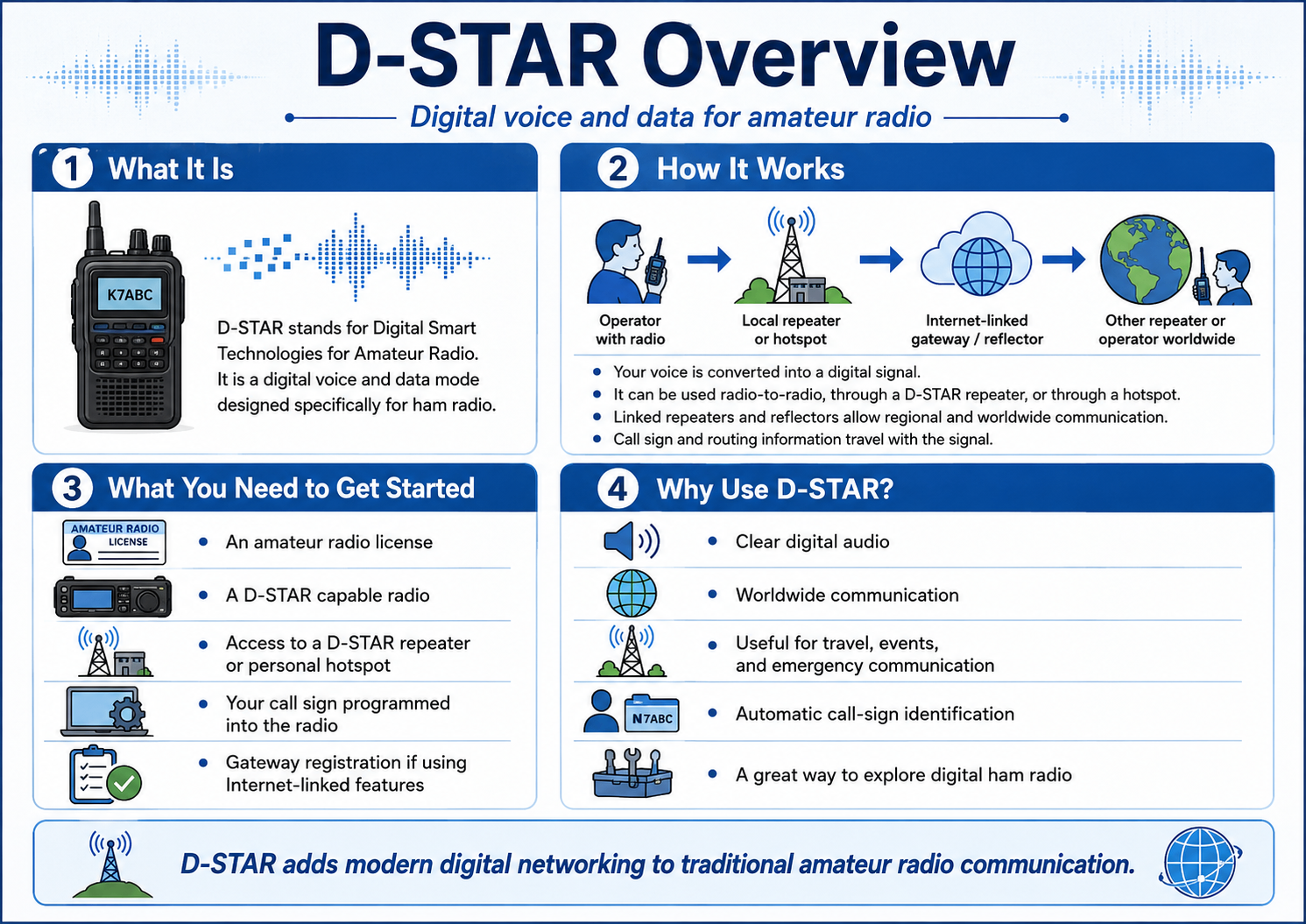
D-STAR, short for Digital Smart Technologies for Amateur Radio, is a digital voice and data system developed specifically for amateur radio. It allows operators to communicate using clear digital audio on the VHF, UHF, and microwave amateur bands. Unlike ordinary analog FM, D-STAR radios convert the operator’s voice into digital information before transmitting it. This digital signal also carries identification and routing information, including the operator’s call sign.
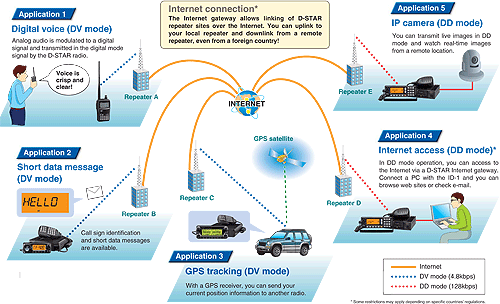
D-STAR can be used for direct radio-to-radio contacts, much like conventional simplex operation, or through a local D-STAR repeater. When a repeater is connected to the Internet, operators can communicate with other D-STAR repeaters and users around the world. Calls can be routed to a particular repeater, reflector, or individual call sign. Reflectors are shared Internet-linked meeting places where many D-STAR users can gather and communicate, much like a wide-area repeater network.
To get started, an operator needs an amateur radio license, a D-STAR-capable radio, and access to either a compatible repeater or personal hotspot. D-STAR radios are most commonly produced by Icom, although other manufacturers have offered compatible equipment. The radio must be programmed with the operator’s call sign and the proper repeater settings. To use Internet-linked D-STAR features, the operator may also need to register their call sign with a D-STAR gateway system. A hotspot can provide D-STAR access from home when no nearby repeater is available, provided an Internet connection is present.
Ham radio operators should consider D-STAR because it combines traditional radio communication with modern digital networking. It provides generally clean audio, worldwide communication through linked repeaters and reflectors, automatic call-sign identification, and limited digital data capabilities. It can also be useful during travel, public-service events, and emergencies by allowing operators to connect with established regional or international networks. While D-STAR does not replace analog FM, it gives amateur radio operators another capable and well-established way to communicate and experiment with digital radio technology.
Disclaimer: This independent educational material is not affiliated with, sponsored by, or endorsed by the developers, manufacturers, standards organizations, government agencies, or network operators associated with the technologies and services described.