HF Basics
Making your first HF contact can feel a little intimidating. Unlike a local repeater, HF operating often involves calling or answering stations you have never spoken with before, exchanging signal reports and other information, and using operating terms and procedures that may initially be unfamiliar.
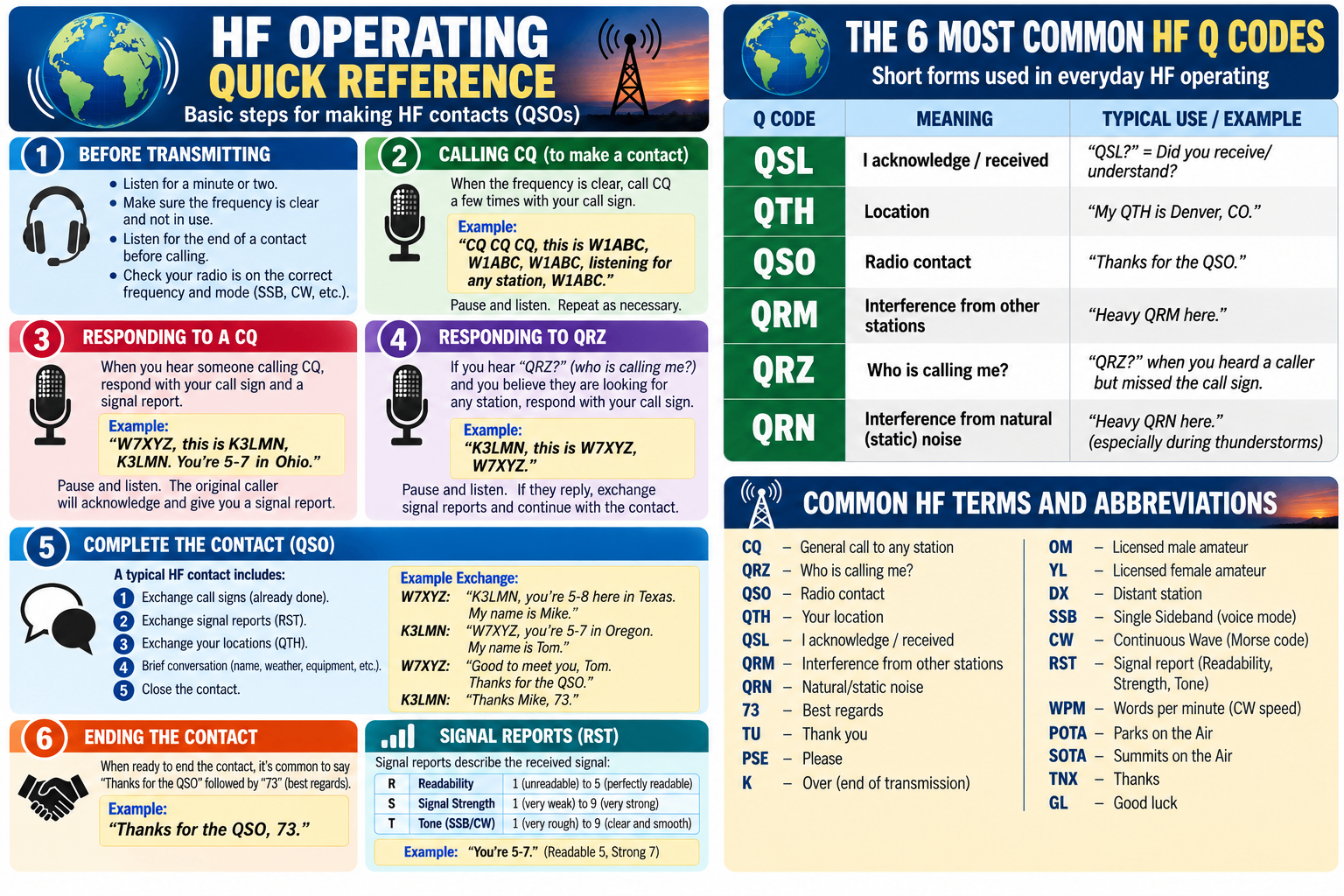
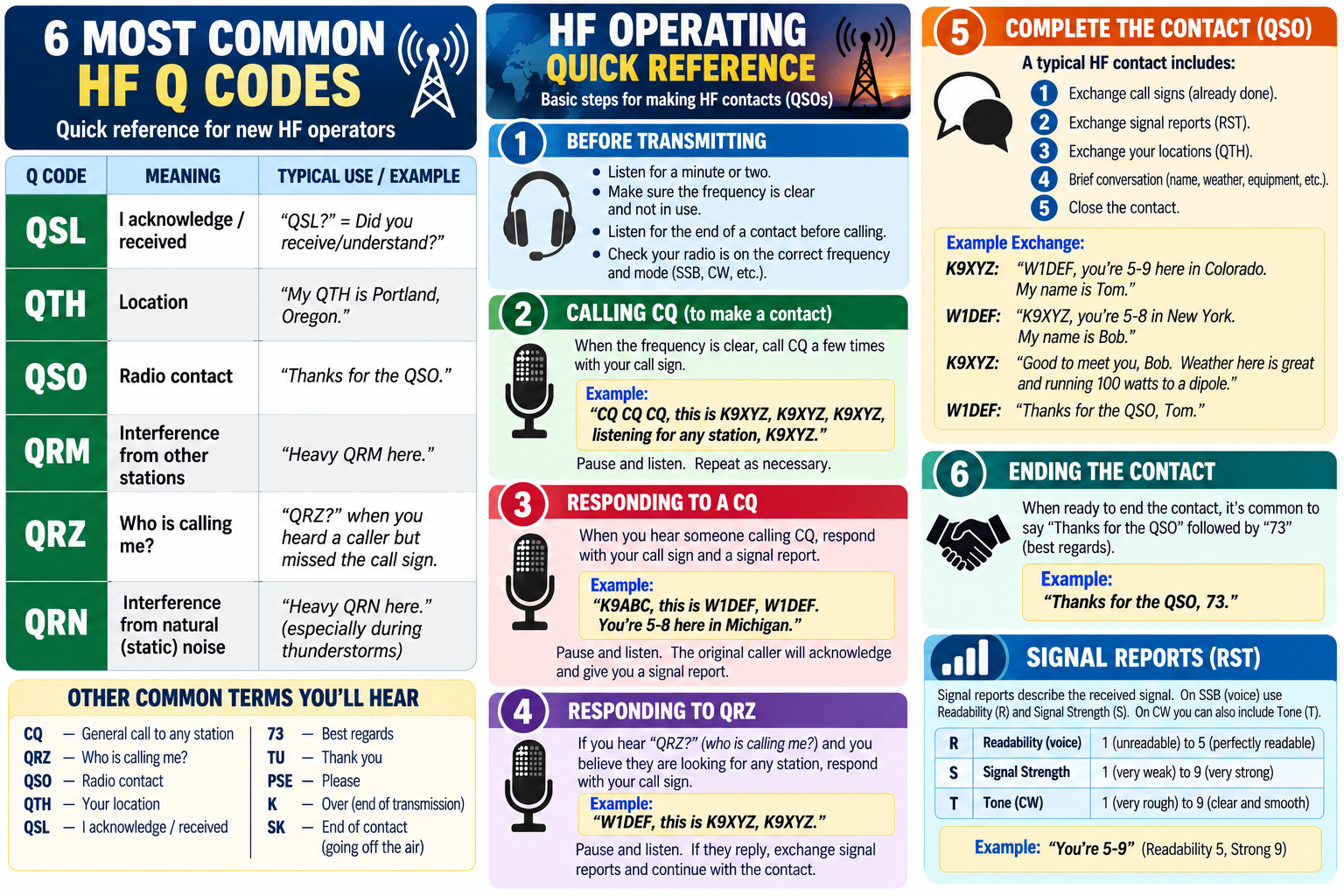
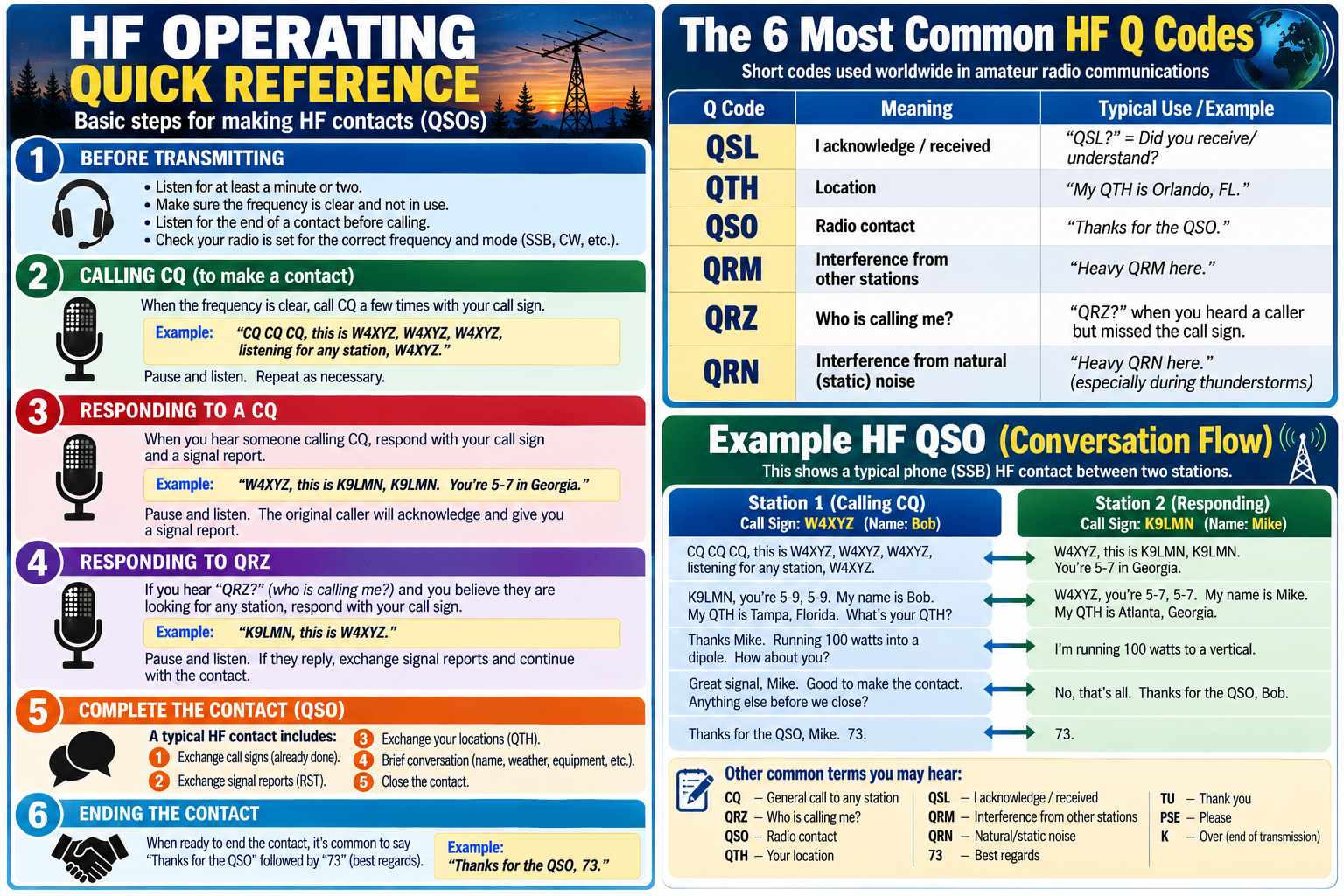
The purpose of this page is to make that process easier. The reference graphics below cover many of the same basic procedures, so some of the information is intentionally repeated. Each presents the material a little differently. Review them and use whichever format you find easiest to follow or best suited to your needs. You do not need to memorize everything before getting on the air—keep a reference nearby, listen to experienced operators, and use these guides until the procedures become familiar.
Disclaimer: This independent educational material is not affiliated with, sponsored by, or endorsed by the developers, manufacturers, standards organizations, government agencies, or network operators associated with the technologies and services described.
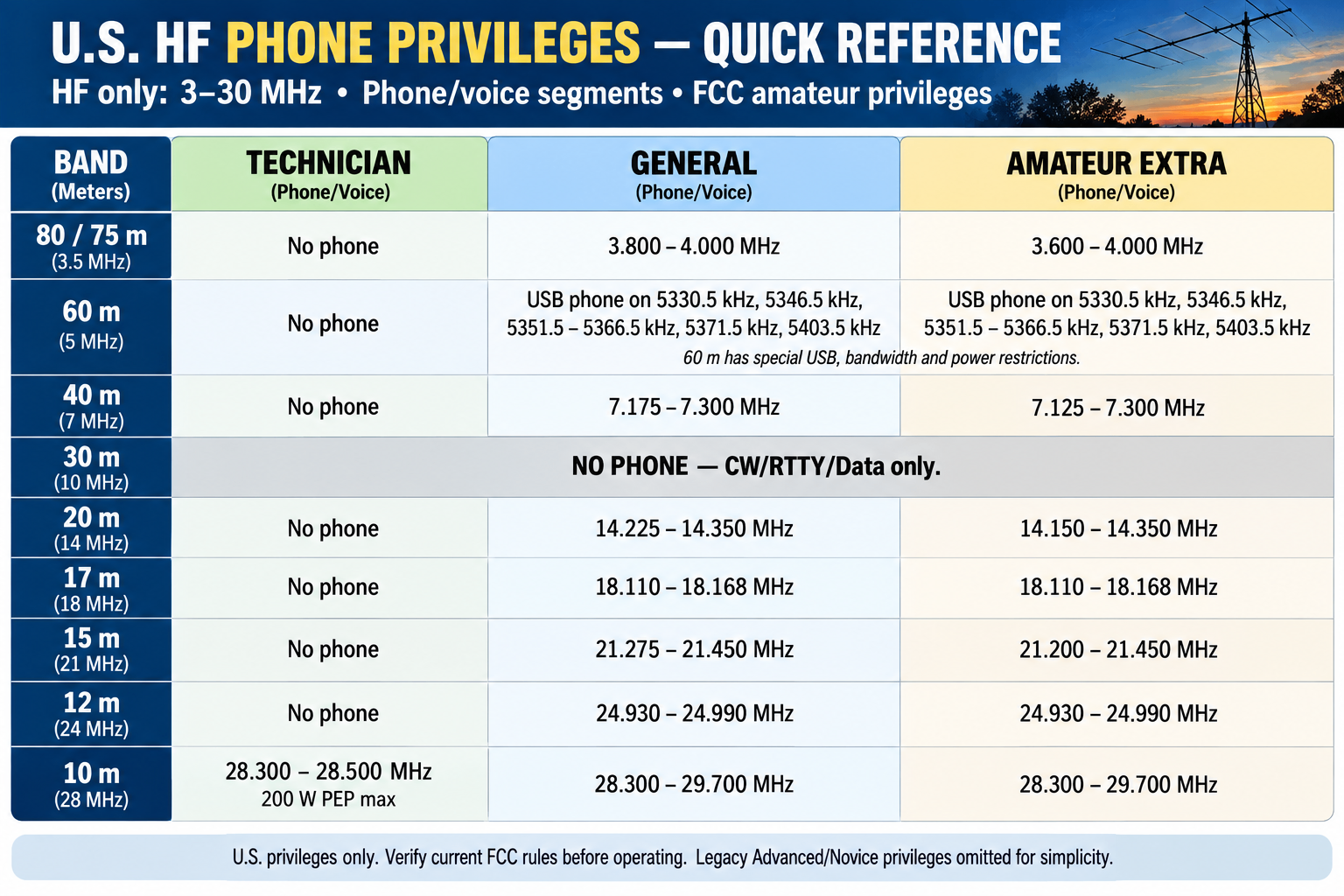
**Note:** This chart is intended only as a simplified reference for U.S. amateur HF phone/voice privileges. It does not show every operating mode, sub-band, restriction, or voluntary band-plan recommendation. Some bands, especially 60 meters, have additional operating requirements and limitations. Before transmitting, operators should confirm the current FCC rules and band privileges for their license class. For complete and current amateur band information, including detailed frequency allocations and band plans, visit the ARRL website at www.arrl.org.