Understanding Amateur Radios
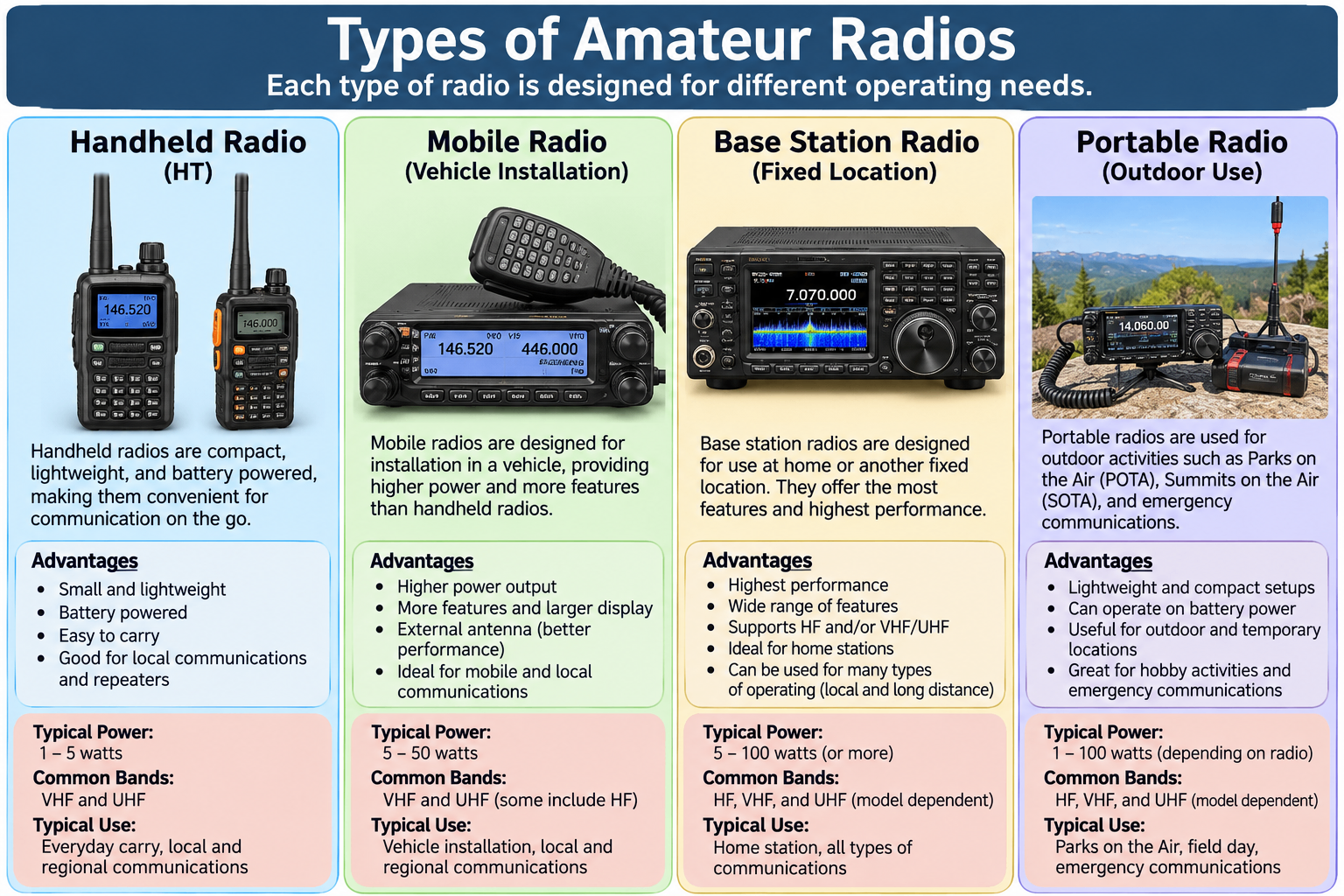
Amateur radios come in a variety of shapes, sizes, and capabilities, each designed for different operating needs. The four basic types are handheld, mobile, base station, and portable radios. Handheld radios are compact and convenient for communicating on the go, while mobile radios are commonly installed in vehicles. Base station radios are designed for use at home or another fixed location, and portable radios are particularly useful for outdoor activities such as Parks on the Air (POTA). Each type offers advantages and limitations in terms of power, features, portability, and cost. The graphic below illustrates these four types of radios and highlights their primary uses.
Disclaimer: This independent educational material is not affiliated with, sponsored by, or endorsed by the developers, manufacturers, standards organizations, government agencies, or network operators associated with the technologies and services described.
Types of Amateur Radios
Whether you're just getting started in amateur radio and looking to purchase your first radio, or you're an experienced operator interested in expanding your capabilities, choosing the right equipment can be challenging. With so many types of radios, features, operating modes, and price ranges available, it's important to understand your options before making a decision. The best radio for you will depend on your interests, how and where you plan to operate, your license privileges, and your budget. This page introduces the different types of amateur radios, explains some of the key features and considerations, and provides guidance to help you make an informed decision. Our goal isn't to recommend a particular brand or model, but to help you find a radio that best fits your needs and allows you to enjoy all that amateur radio has to offer.
Frequency Bands & Operating Modes
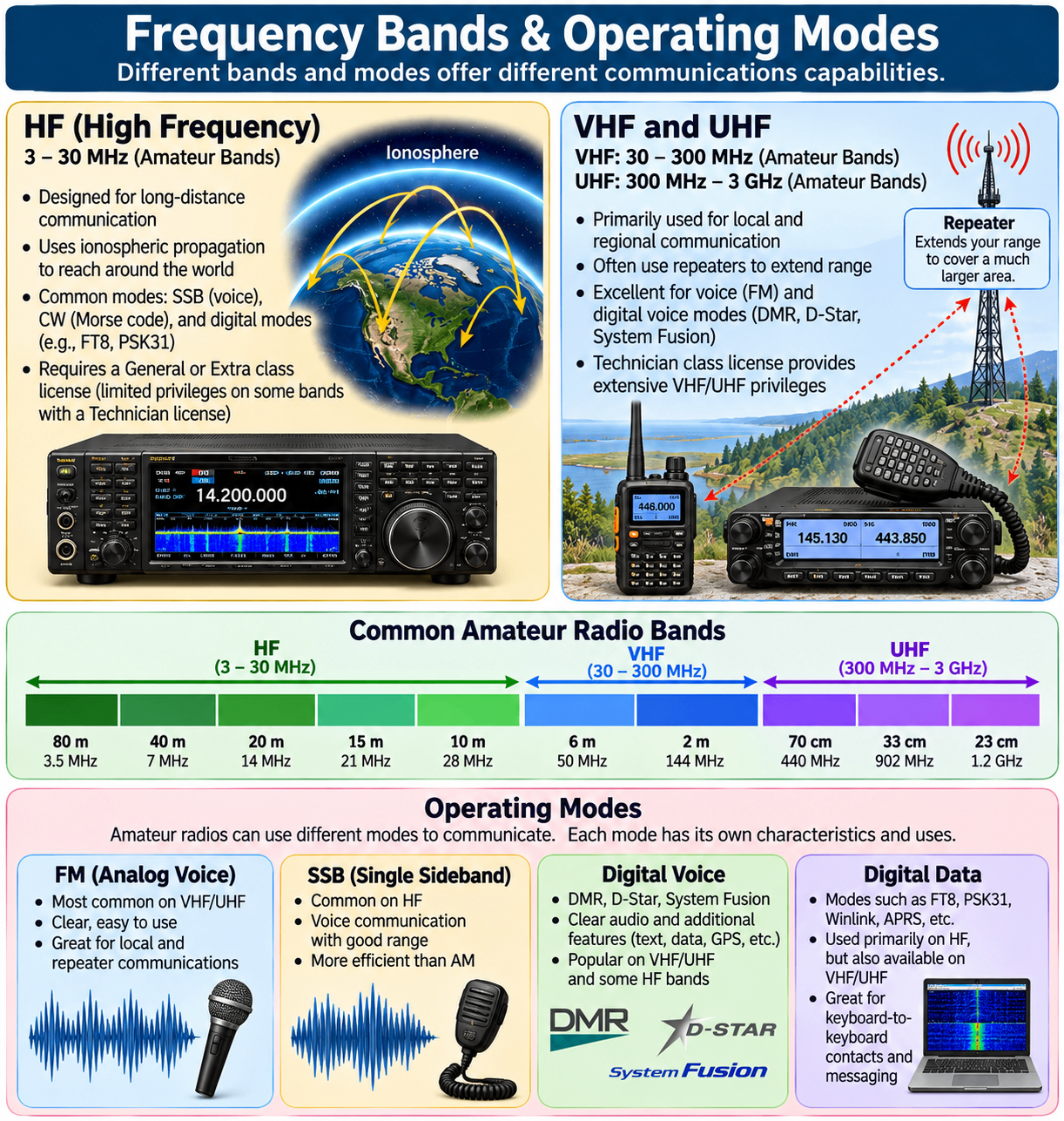
Amateur radios operate on different frequency bands and use various operating modes, each offering different communication capabilities. HF radios are commonly used for long-distance communications, while VHF and UHF radios are generally used for local and regional contacts, often through repeaters. Radios may support traditional analog modes, such as FM and SSB, or digital modes, such as DMR, D-Star, and System Fusion. Some radios operate on a single frequency band, while others cover multiple bands and support several operating modes. The graphic below highlights these differences to help you better understand which capabilities may be important when selecting a radio.
Analog Versus Digital Radios
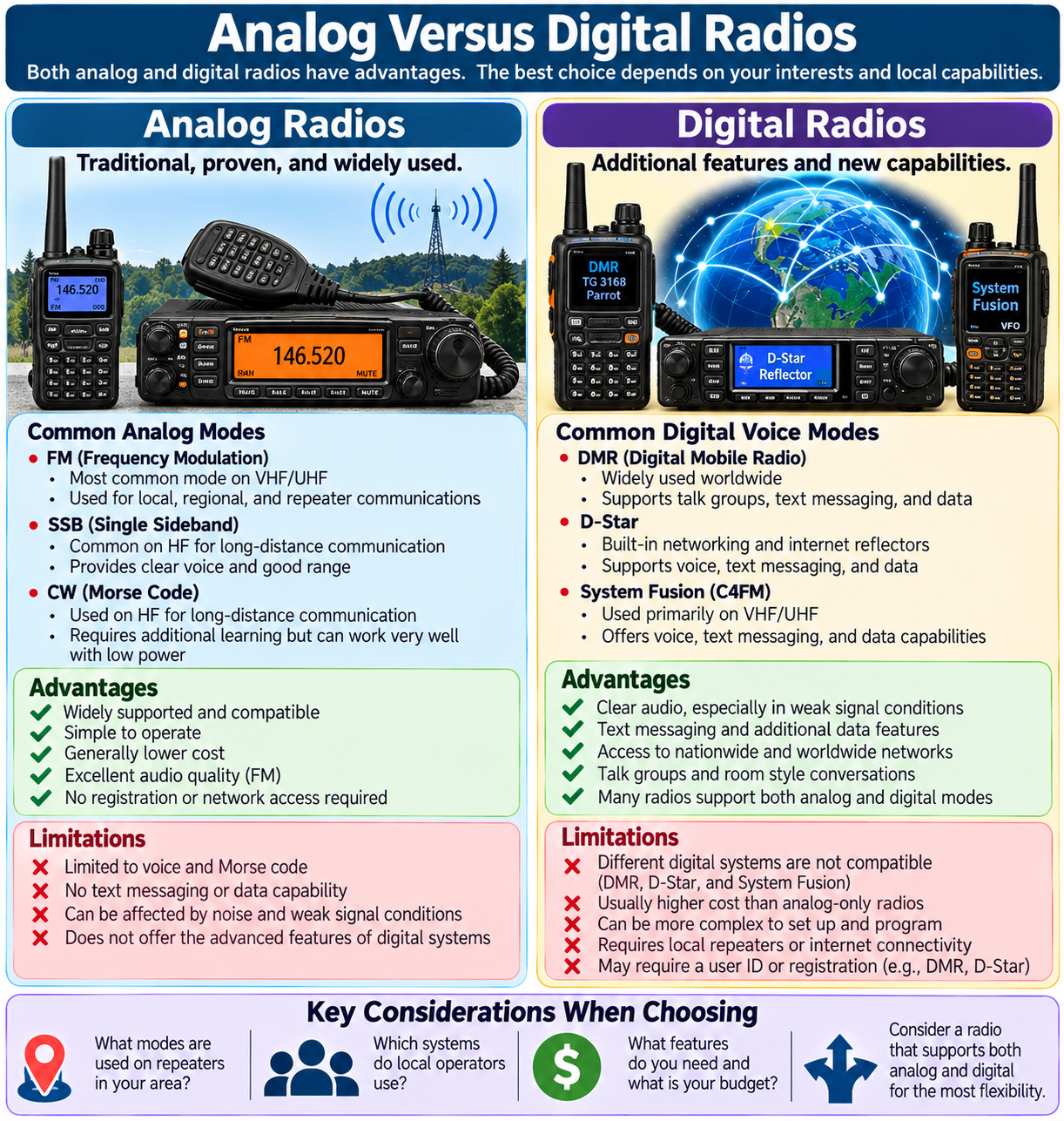
One important consideration when selecting an amateur radio is whether to choose an analog radio, a digital radio, or one that supports both. Traditional analog radios, particularly FM radios, are widely used for local communications and are generally simpler to operate and less expensive. Digital radios offer additional capabilities, such as improved audio quality under suitable conditions, text messaging, and access to digital networks. However, several digital voice systems exist, including DMR, D-Star, and System Fusion, and they are not generally compatible with one another. Before purchasing a digital radio, it's important to consider which systems are supported by repeaters in your area and which ones your fellow operators use. The graphic below compares analog and digital radios, highlighting their advantages, limitations, and key considerations to help you choose the right radio for your needs.
Features to Consider
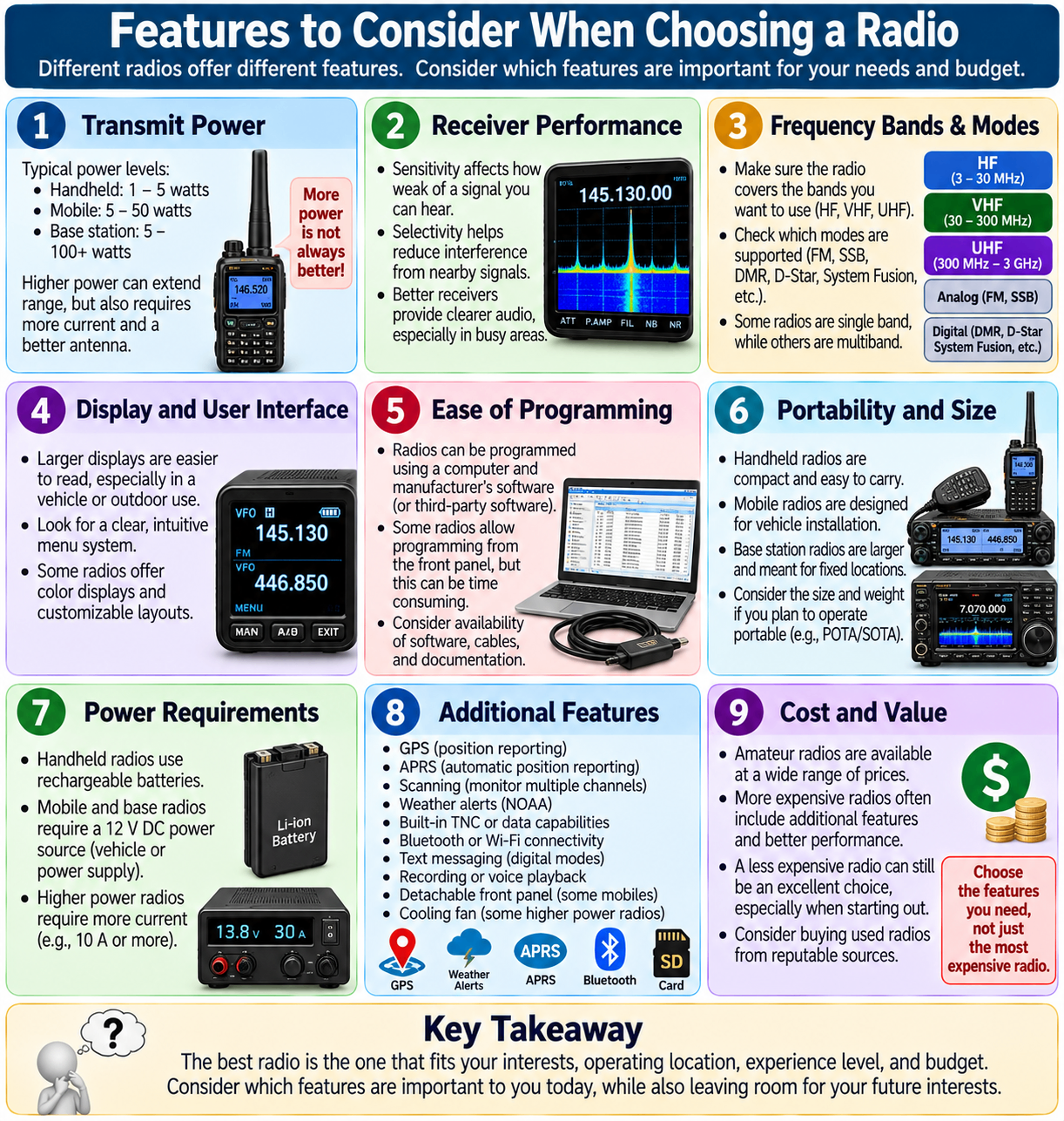
When selecting an amateur radio, there are several important features to consider beyond its frequency bands and operating modes. Transmit power, receiver performance, ease of programming, display size, portability, and power requirements can all affect how well a radio meets your needs. Some radios offer additional conveniences, such as built-in GPS, automatic scanning, weather alerts, and computer connectivity. While more expensive radios often include additional features, they aren't necessarily the best choice for every operator. It's important to distinguish between features you really need and those you may rarely use. The graphic below highlights some of the most important features to consider when choosing a radio that fits your operating interests, experience level, and budget.
Choosing the Right Radio
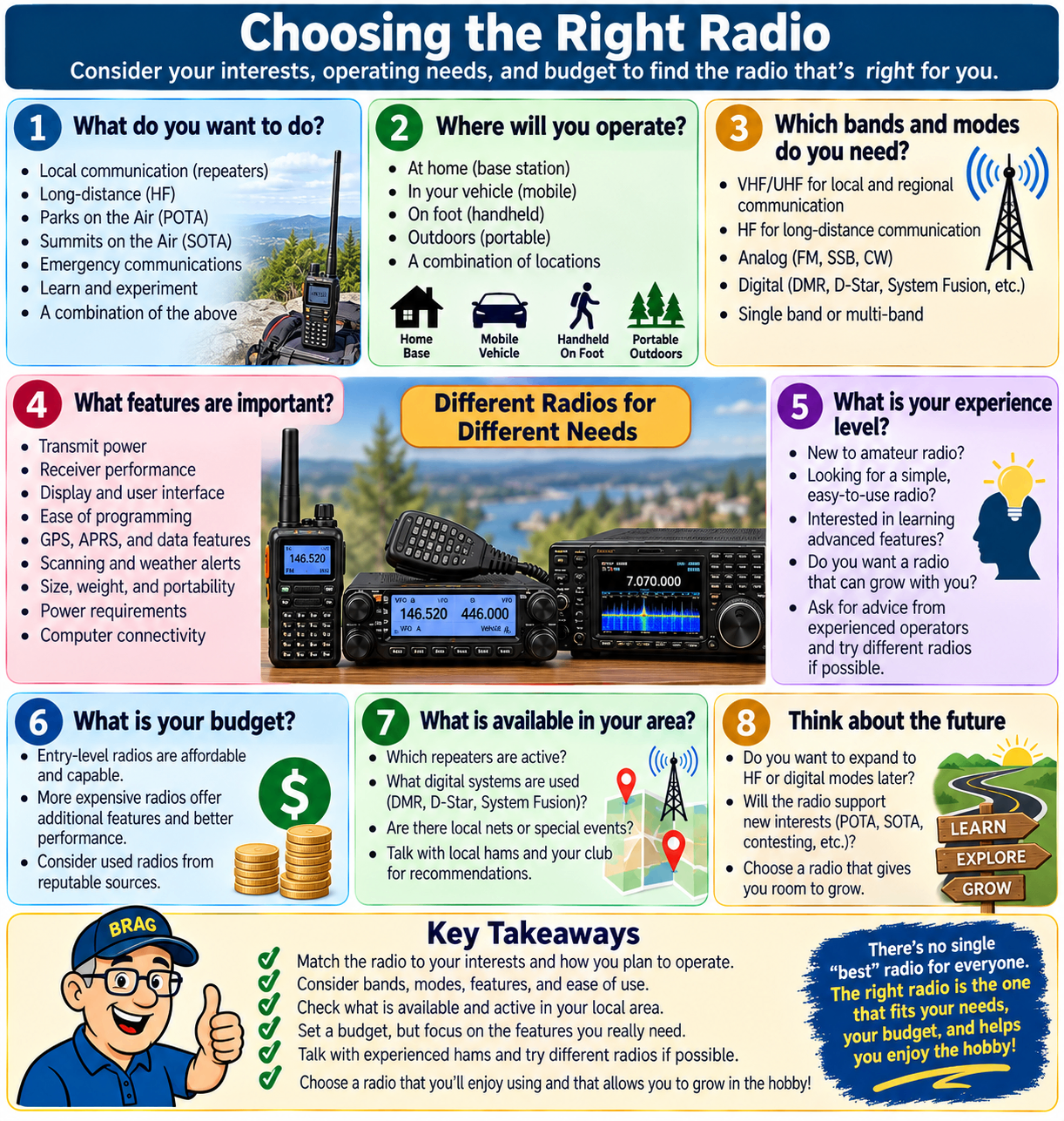
Choosing the right amateur radio comes down to understanding your interests, operating needs, and budget. As we've discussed, there are many factors to consider, including the type of radio, frequency bands, operating modes, features, and ease of use. Before making a purchase, think about how and where you plan to operate, which repeaters and digital systems are available in your area, and what capabilities you may want to explore in the future. Talking with experienced amateur radio operators, attending local club meetings, and seeing different radios in operation can also help you make an informed decision. Remember, the most expensive or feature-packed radio isn't necessarily the best choice. The right radio is one that meets your needs today, provides room to grow, and, most importantly, helps you enjoy the hobby! The graphic below summarizes some key questions to ask yourself before making your decision.