Station Safety
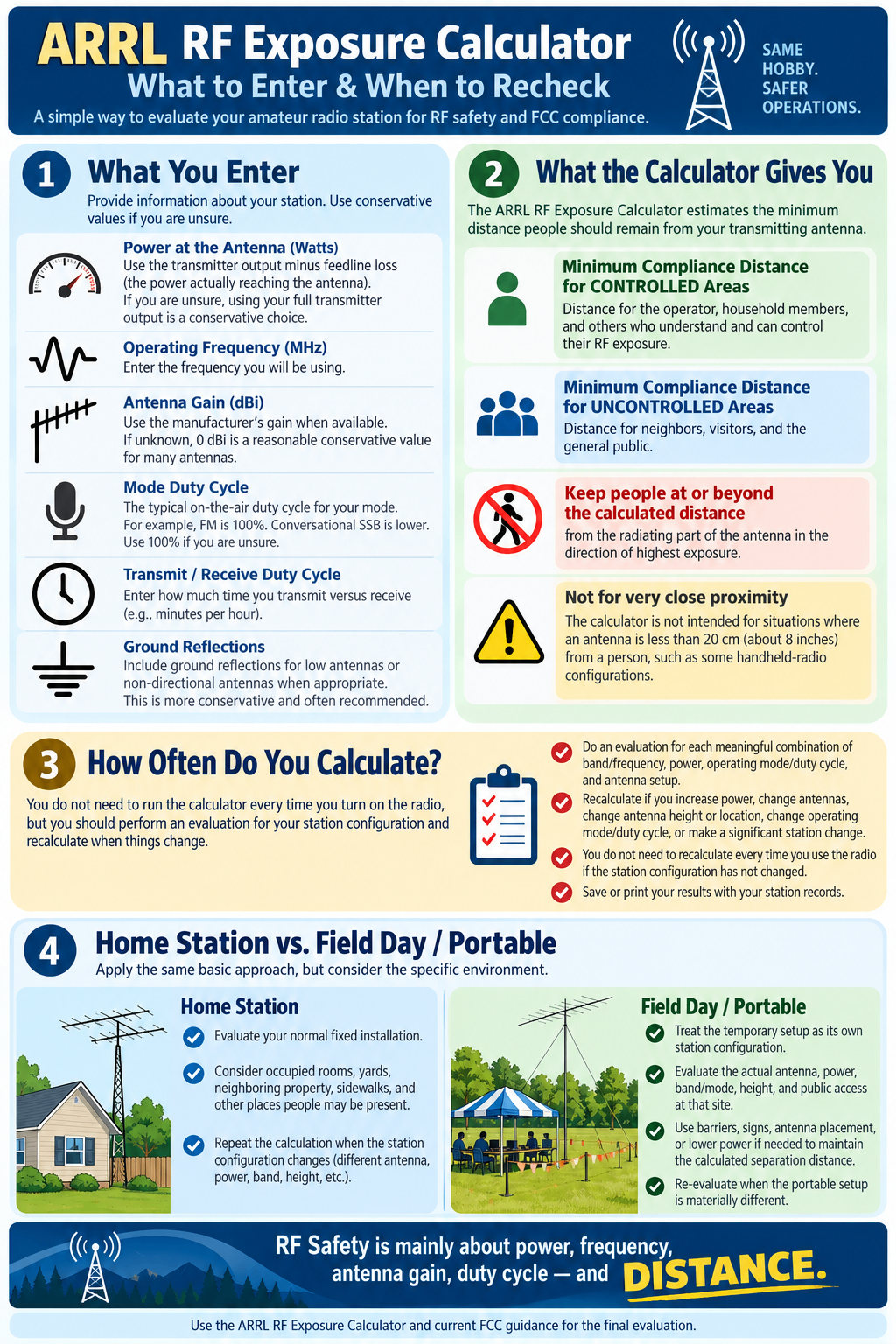
Amateur Radio is generally a very safe hobby, but transmitting antennas produce radio-frequency (RF) energy, and operators are responsible for making sure people are not exposed to RF energy above FCC limits. Since May 2023, all U.S. amateur stations must be evaluated for RF exposure compliance; this does not necessarily require special test equipment or professional measurements. For most hams, the easiest method is the ARRL RF Exposure Calculator, which estimates the minimum distance people should remain from a transmitting antenna. The calculator considers factors such as the power reaching the antenna, operating frequency, antenna gain, transmission mode and duty cycle, how long you transmit versus receive, and whether ground reflections should be considered. It provides distances for both controlled environments, where people understand and can control their RF exposure, and uncontrolled environments, such as areas accessible to neighbors or the general public.
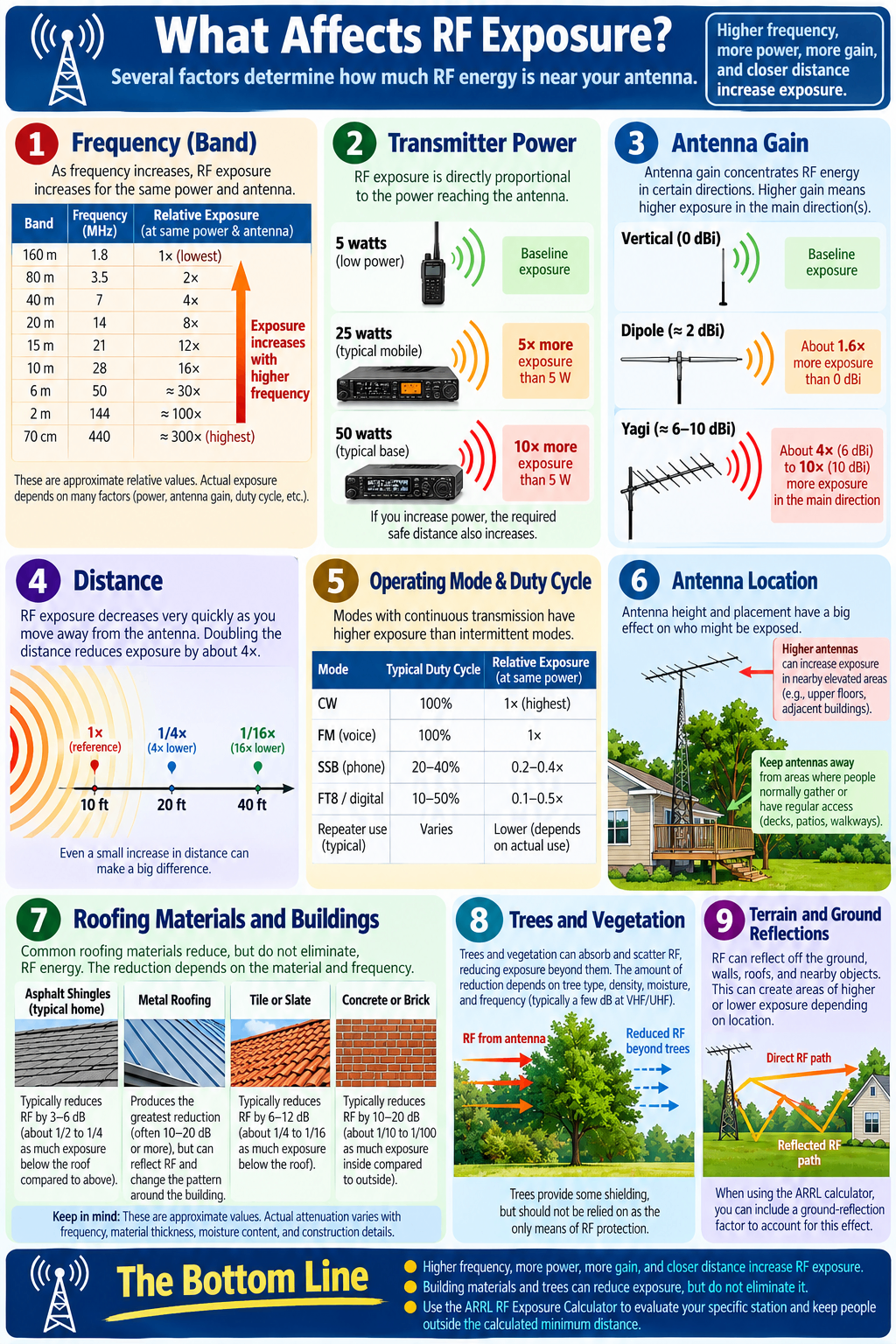
RF safety is not simply a matter of transmitter wattage. Antenna gain, frequency, operating mode, transmission time, and especially the distance between people and the antenna all affect exposure. Antenna placement is therefore an important safety consideration: keeping transmitting antennas away from normally occupied areas and out of reach can greatly reduce exposure. The ARRL calculator provides a practical way for an amateur operator to evaluate a station and determine an appropriate minimum compliance distance. The results may be printed and kept with station records; they do not normally need to be submitted to the FCC.
The calculator is intended primarily for typical fixed antennas and should not be used when an antenna is less than 20 cm (about 8 inches) from a person, such as some handheld-radio situations. Operators should also remember that changing antennas, increasing power, changing bands, or substantially changing the station installation may warrant performing the evaluation again.
Disclaimer: This independent educational material is not affiliated with, sponsored by, or endorsed by the developers, manufacturers, standards organizations, government agencies, or network operators associated with the technologies and services described.
Understanding RF safety is important, but fortunately you do not have to determine safe exposure distances on your own. The ARRL RF Exposure Calculator provides a simple way to evaluate a typical amateur station. By entering information about your frequency, transmitter power, antenna gain, operating mode, and transmitting time, the calculator estimates the minimum distance that should be maintained between the antenna and people.
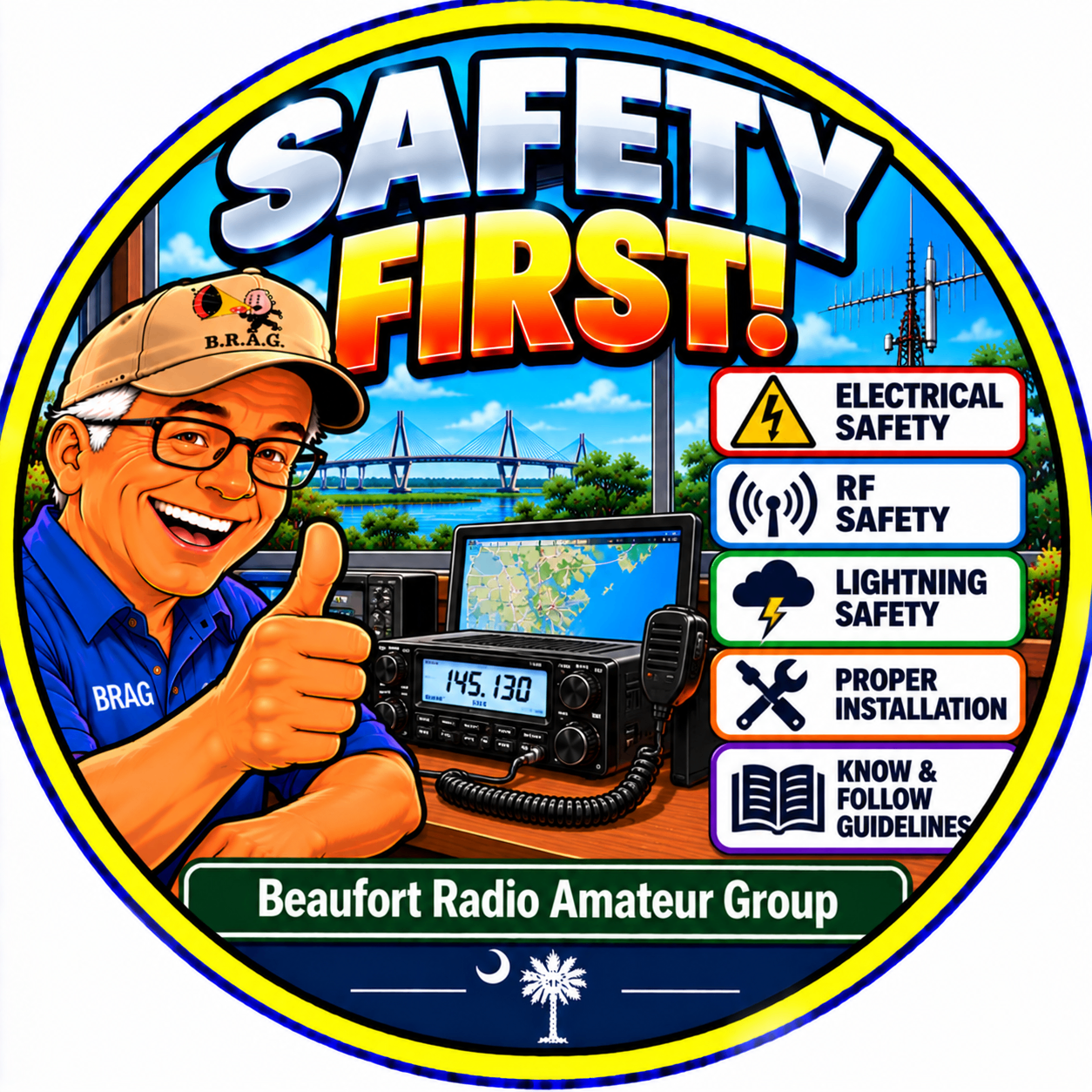
Safety First!
Being a responsible amateur radio operator means making safety part of every station setup and every transmission. RF safety is not only about protecting yourself—it also means protecting family members, neighbors, visitors, pets, fellow operators, and anyone else who may be near your antenna. Take the time to understand your station, evaluate RF exposure, maintain appropriate separation distances, and recheck your setup whenever something significant changes. Whether operating from home, in a vehicle, or at a Field Day or portable location, always consider who may be around the antenna and whether they can safely remain there. Good operating practice includes good safety practice. Enjoy the hobby, operate responsibly, and always put safety first.
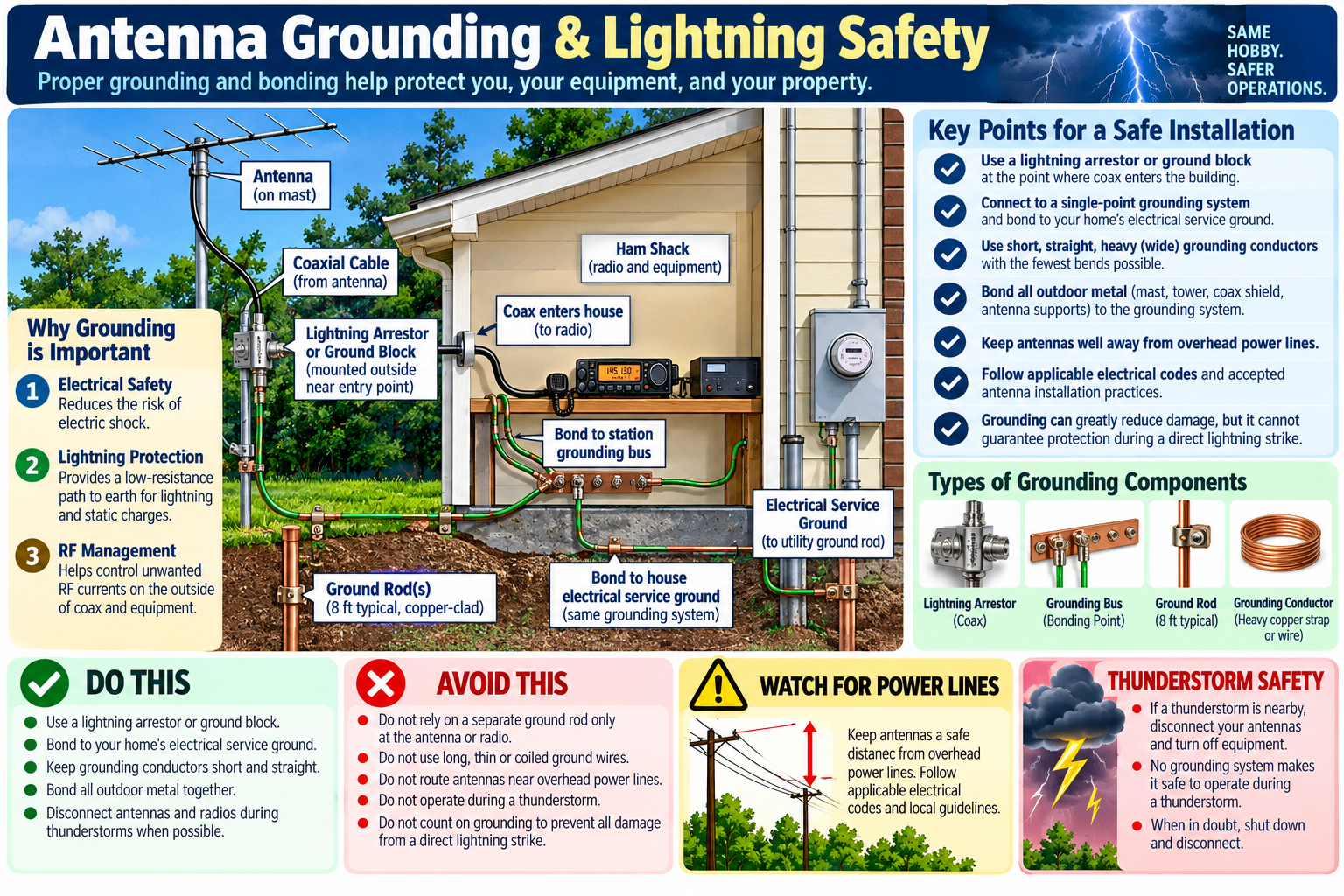
Proper grounding and bonding are another important part of operating a safe Amateur Radio station. Grounding serves several purposes, including electrical shock protection, lightning and static protection, and control of unwanted RF currents. Outdoor antennas and feed lines should be installed using appropriate grounding and bonding practices, with the station grounding system coordinated with the building's electrical grounding system. Simply adding a separate ground rod near the radio is not necessarily a complete or proper grounding system.
Lightning deserves special attention. A properly designed grounding and bonding system can greatly reduce the possibility of equipment and property damage, but no grounding system makes it safe to operate during a thunderstorm. Antennas should also be installed well away from overhead electrical lines, and operators should follow applicable electrical codes and accepted antenna-installation practices. ARRL provides extensive information on grounding, bonding, and lightning protection for Amateur Radio stations.
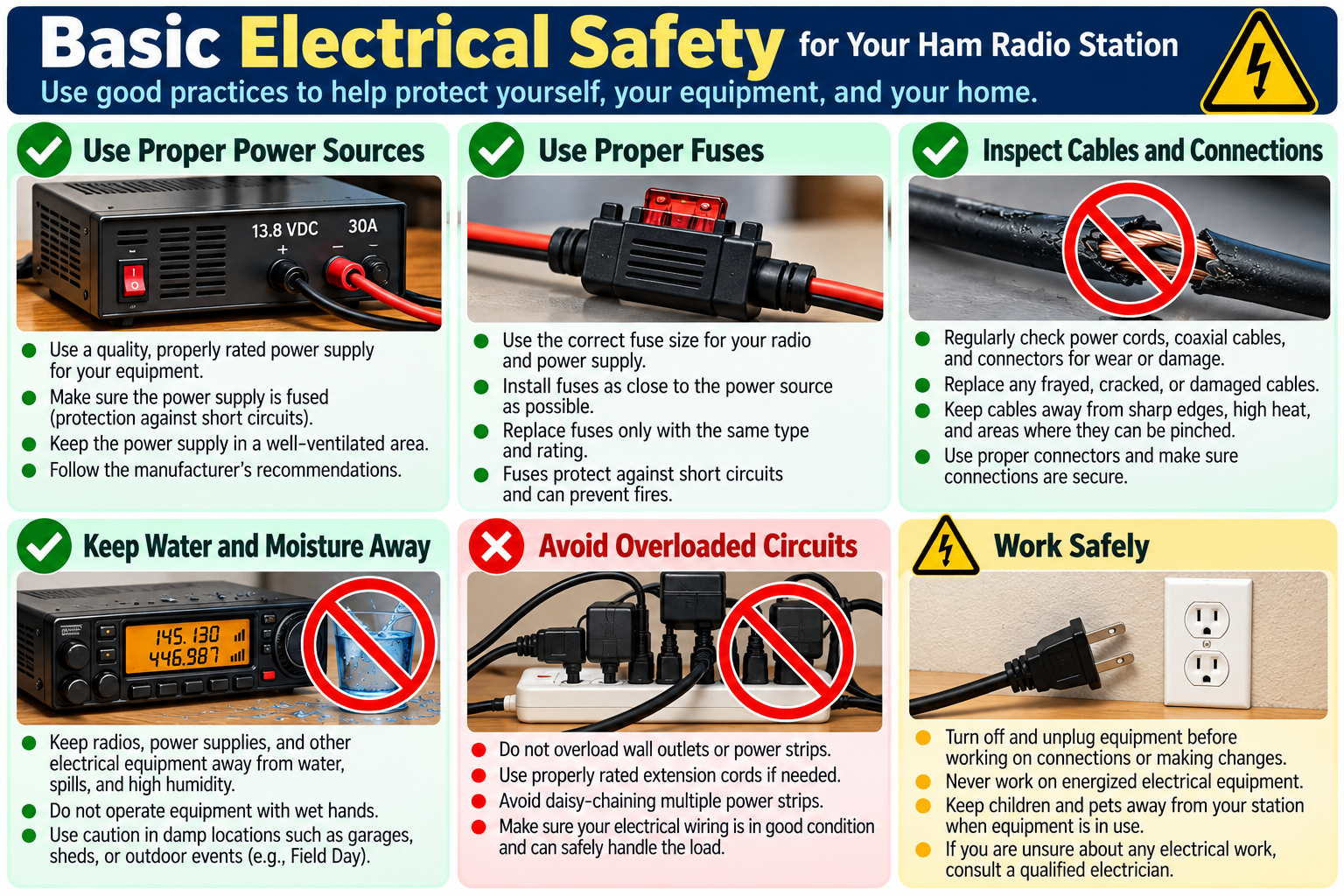
Amateur radio equipment should always be connected to a properly installed electrical supply, with appropriate fuses and protection against overloaded circuits. Never work on energized electrical equipment, inspect power cords and connections regularly, and keep electrical equipment away from water or excessive moisture.