APRS Introduction
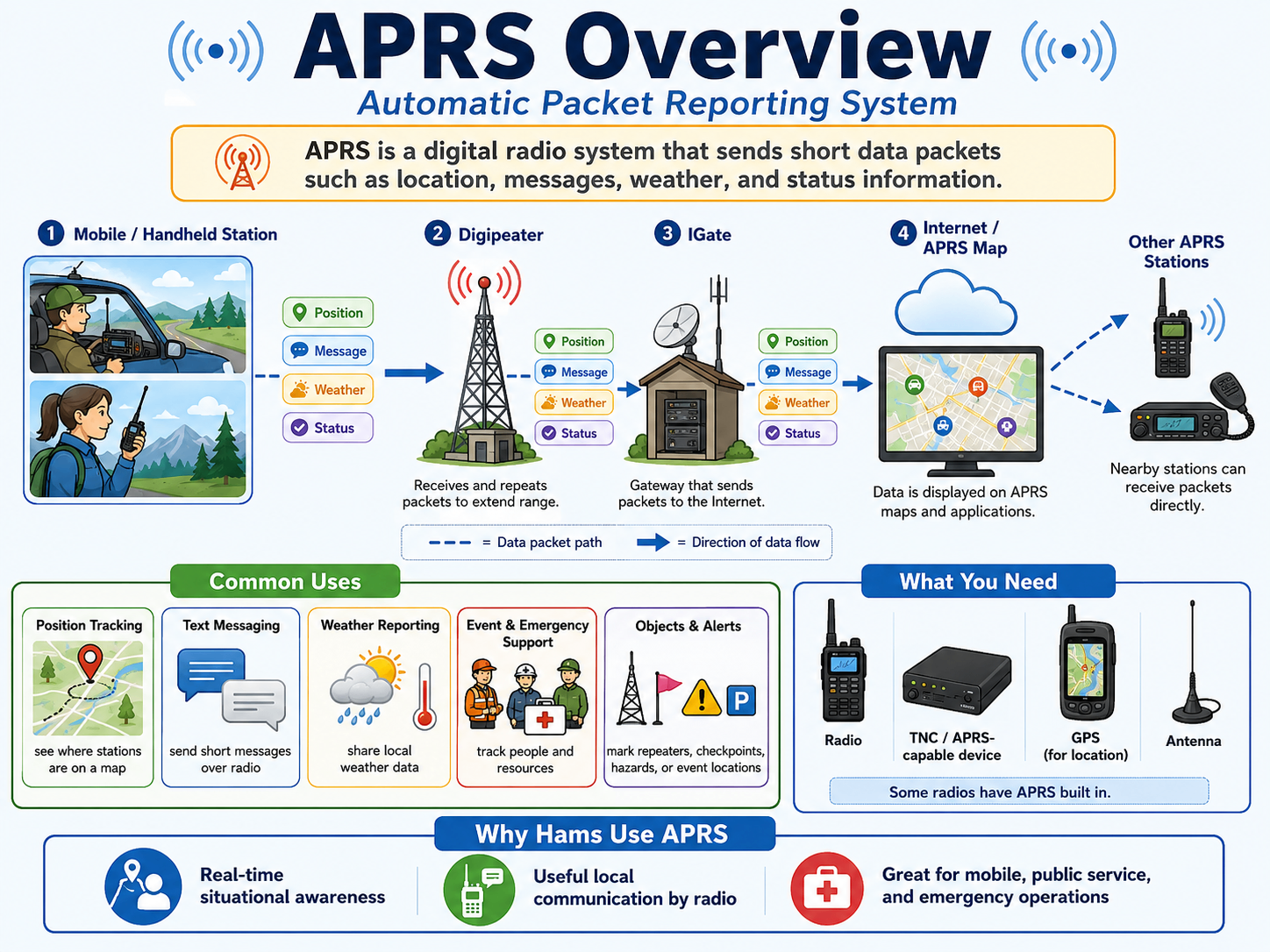
For ham radio operators, APRS is useful because it combines radio communication with real-time situational awareness. A mobile station can automatically report its location while traveling, allowing other operators to see where that station is without needing constant voice updates. Fixed stations can share weather information, repeater objects, club event locations, or emergency service details. During public service events, severe weather operations, search-and-rescue support, or emergency communications, APRS can help operators keep track of people, resources, and changing conditions.
Another reason hams should consider APRS is that it demonstrates one of amateur radio’s great strengths: communication without depending entirely on commercial networks. While APRS information can be shared on the internet, the core system works by radio. A properly equipped station can send and receive useful local information even when cell service is poor, overloaded, or unavailable. For operators who enjoy mobile radio, emergency communications, weather reporting, or experimenting with digital modes, APRS is a practical and interesting part of the hobby.
APRS is also approachable. Many modern handheld, mobile, and base radios include APRS features, and operators can also build APRS stations using older radios, packet interfaces, computers, or small devices such as TNCs and microcontrollers. Whether used for tracking a vehicle, reporting local weather, supporting a club event, or learning more about packet radio, APRS gives amateur radio operators a valuable way to move useful data over the air.