Antenna Basics
Antennas are one of the most important parts of any amateur radio station. Even the best radio cannot perform well if the antenna system is poorly suited to the frequency or improperly installed.
This page is intended to provide a basic introduction to antennas without getting deeply into the mathematics or engineering behind them. The sections below explain how antennas radiate and receive radio signals, introduce several common antenna designs, and cover practical subjects such as frequency, wavelength, polarization, SWR, antenna tuning, feed lines, ground radials, and antenna placement.
The goal is not to make you an antenna engineer, but to give you enough understanding to choose an appropriate antenna, install it properly, recognize common problems, and understand what your antenna analyzer or SWR meter is telling you.
Disclaimer: This independent educational material is not affiliated with, sponsored by, or endorsed by the developers, manufacturers, standards organizations, government agencies, or network operators associated with the technologies and services described.
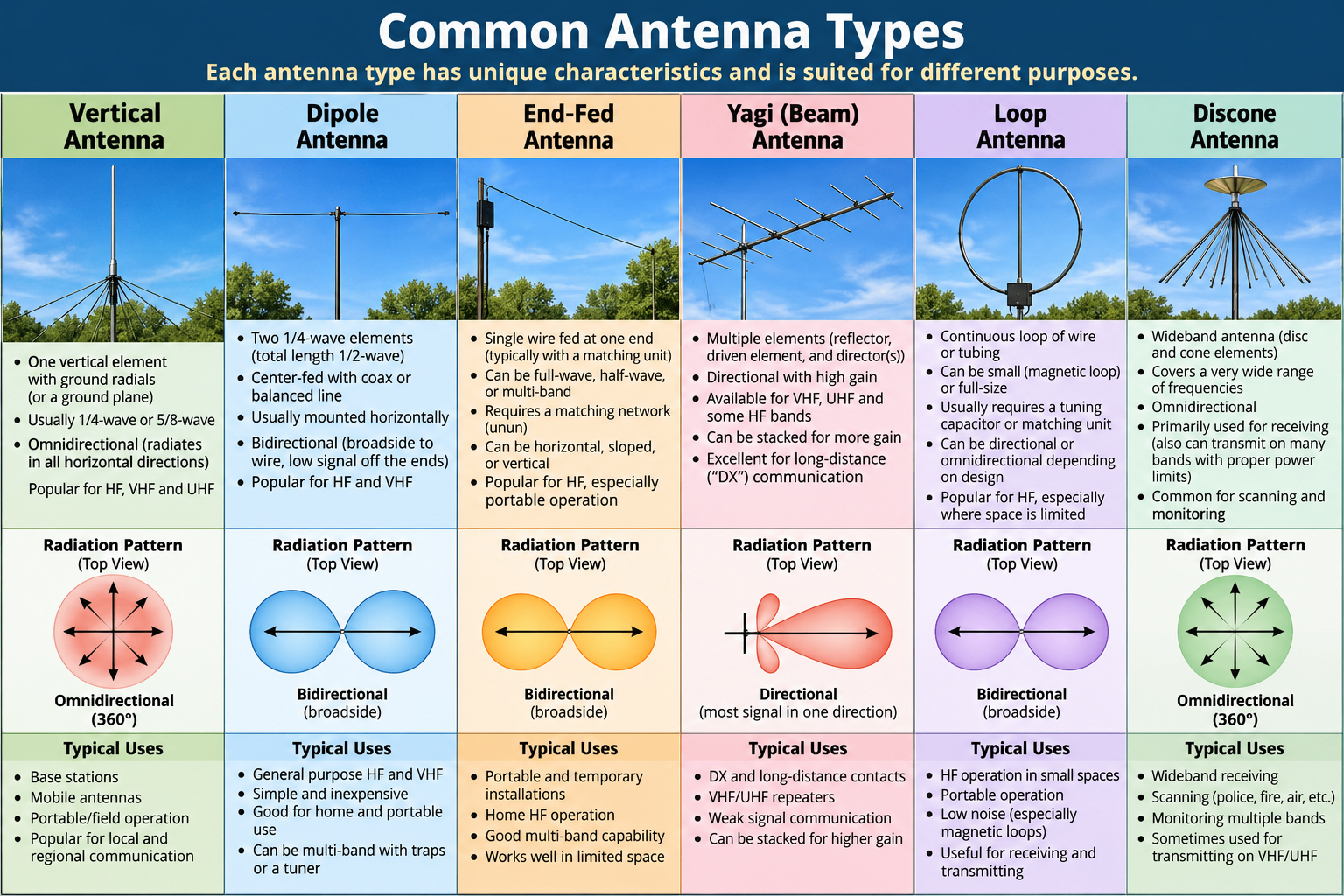
Amateur radio antennas come in many different designs, each with its own advantages, limitations, and typical uses. The graphic below introduces several common antenna types and provides a simple comparison of how they work, their radiation patterns, and where they are commonly used.
Understanding how antennas transmit and receive radio waves makes many other antenna concepts easier to understand. The following videos provide a simple introduction to how radio waves behave, how antennas create and receive those signals, and how antenna size, shape, and orientation affect their performance.
Many vertical antennas depend on a ground plane or radial system to provide the other half of the antenna system and help the antenna operate efficiently. The following video explains what ground planes and radials do, why their size and placement matter, and how they can affect antenna performance.
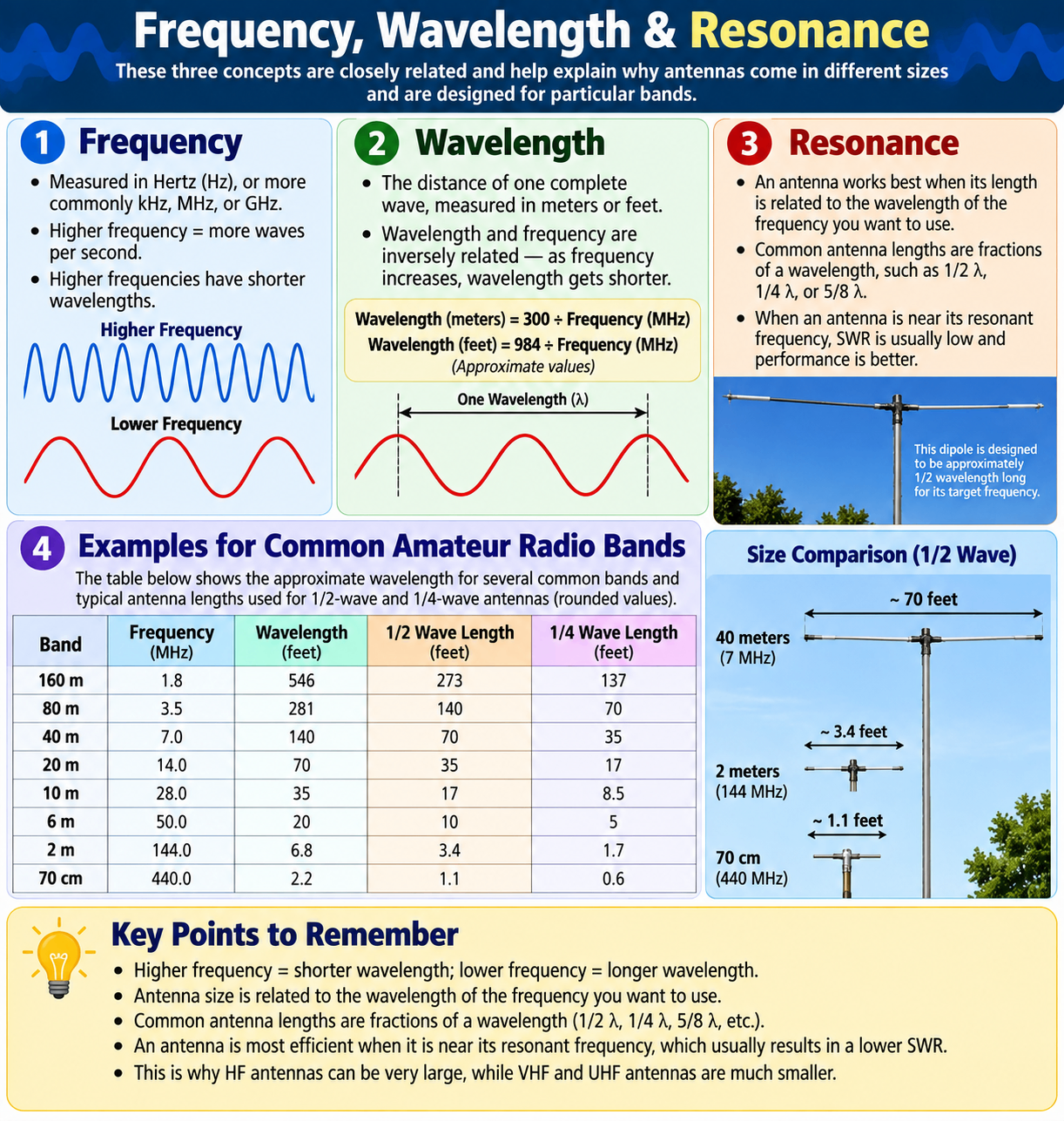
Frequency, wavelength, and resonance are closely related and help explain why antennas come in different sizes and are designed for particular bands. As frequency increases, wavelength becomes shorter, and an antenna’s physical dimensions determine the frequencies at which it works most effectively. Understanding this basic relationship makes it easier to see why antenna length, tuning, and SWR all matter.