Understanding Antenna Standing Wave Ratio (SWR)
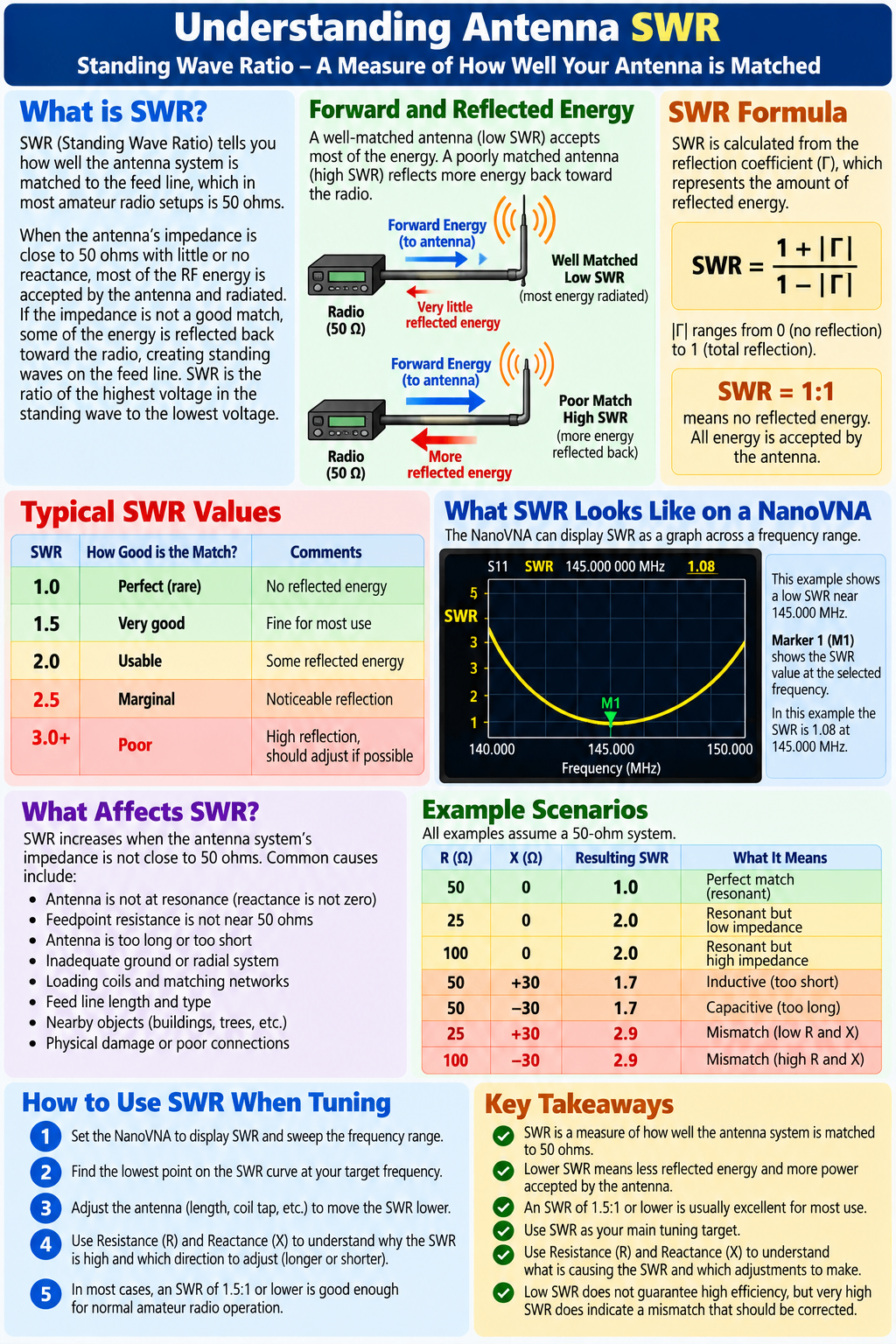
SWR (Standing Wave Ratio) is the most common measurement used by amateur radio operators to judge how well an antenna system is matched to the radio and feed line. In most ham radio installations, the radio and coax are designed for a 50-ohm system, so the closer the antenna’s impedance is to 50 ohms with little reactance, the lower the SWR will be. An SWR of 1.0:1 represents a perfect match, while values around 1.5:1 or lower** are generally considered very good for normal operation. As SWR rises, more RF energy is reflected back toward the transmitter instead of being accepted by the antenna system. Moderate SWR does not necessarily mean the antenna is unsafe or ineffective, but very high SWR can reduce transmitted power and, at sufficiently high levels, may cause some radios to automatically reduce output power for protection. SWR is therefore best thought of as the overall “match” indicator, while Resistance and Reactance help explain what is causing that match to be good or poor.
Disclaimer: This independent educational material is not affiliated with, sponsored by, or endorsed by the developers, manufacturers, standards organizations, government agencies, or network operators associated with the technologies and services described.