Basics of Using a NanoVNA
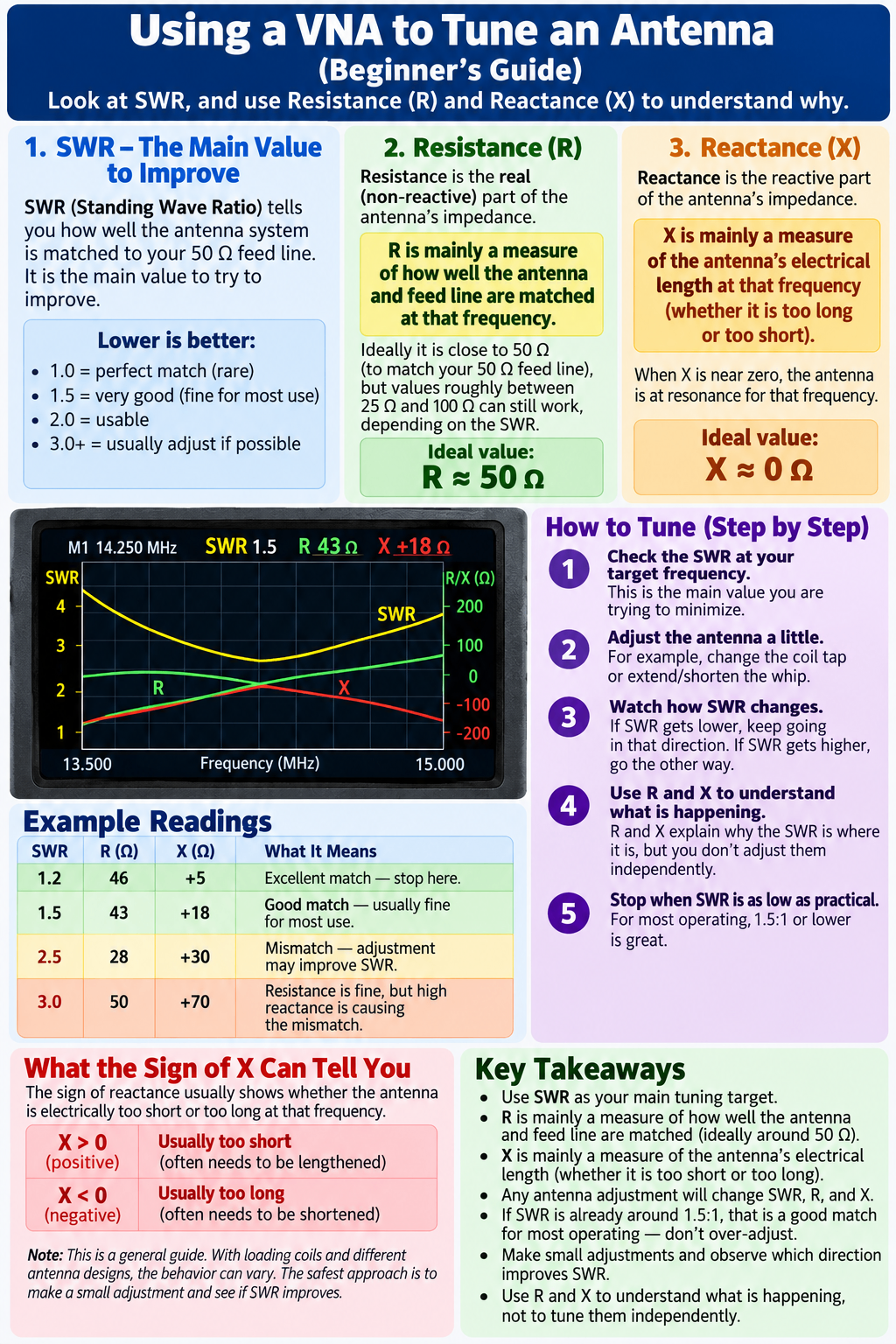
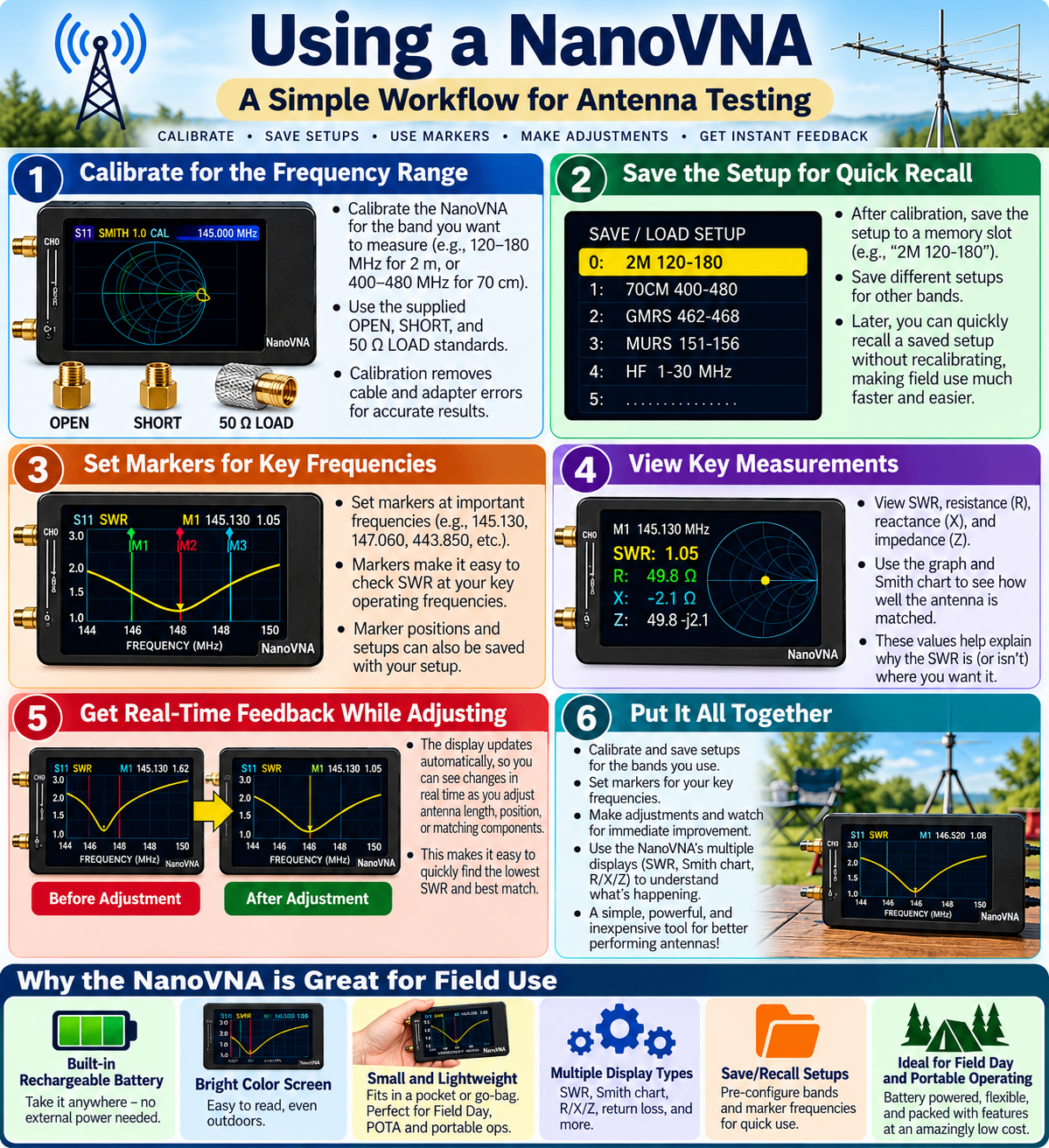
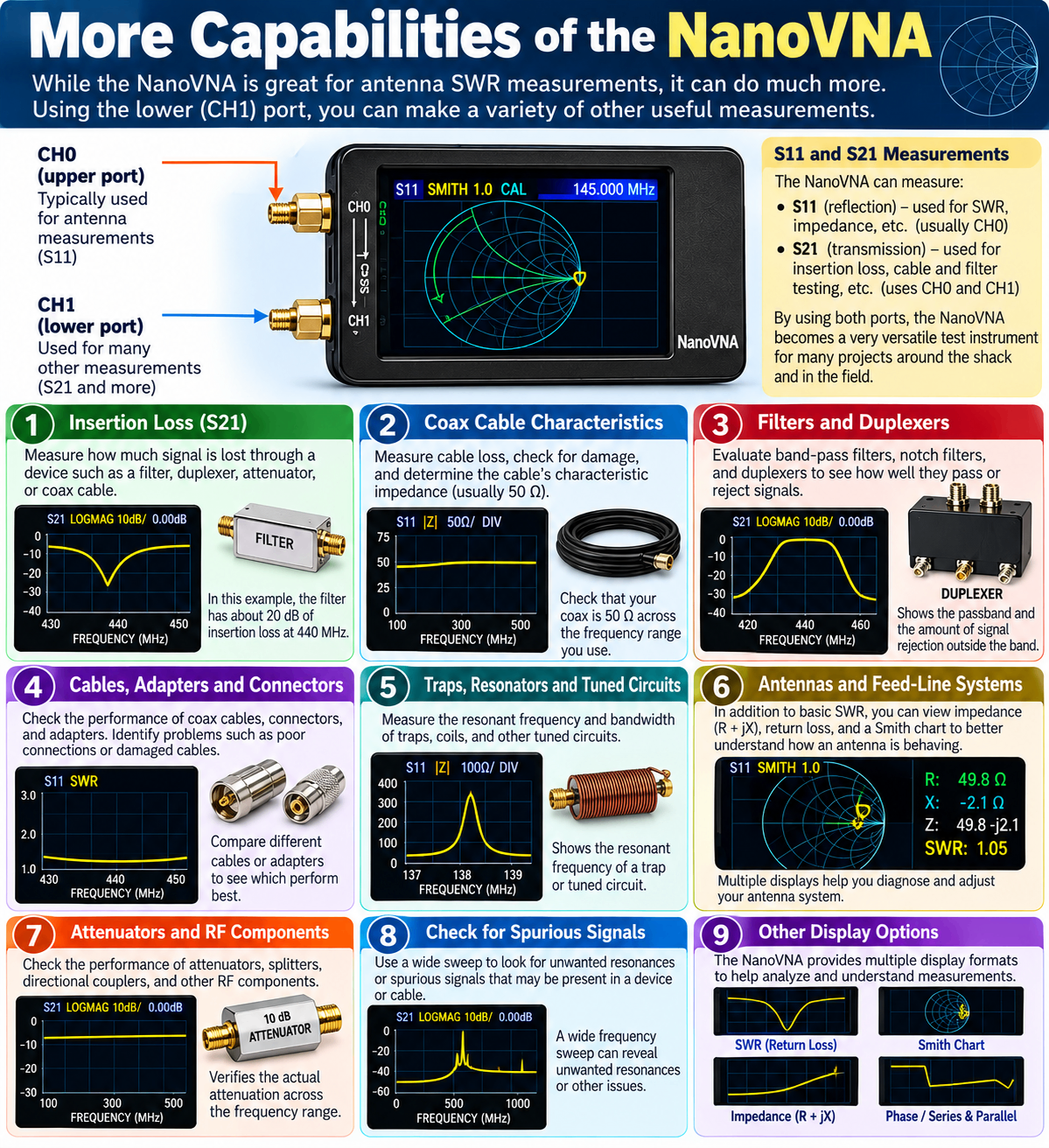
A NanoVNA is a small, remarkably affordable test instrument that can help amateur radio operators better understand how an antenna system is performing. While there are dedicated handheld antenna analyzers on the market that cost considerably more, the NanoVNA offers an unusually broad range of measurement capabilities for its price. In addition to measuring SWR across a range of frequencies, it can display resistance, reactance, impedance, return loss, Smith charts, and other information that can help diagnose why an antenna or feed-line system is behaving as it is.
Some more expensive handheld analyzers may offer advantages such as larger displays, more rugged construction, or simpler controls specifically designed for field antenna work. The NanoVNA, however, is an extremely flexible instrument and provides many capabilities that go well beyond a basic SWR analyzer. For that reason, this page focuses on the NanoVNA as an inexpensive and practical way for amateur radio operators to learn about and analyze their antenna systems.
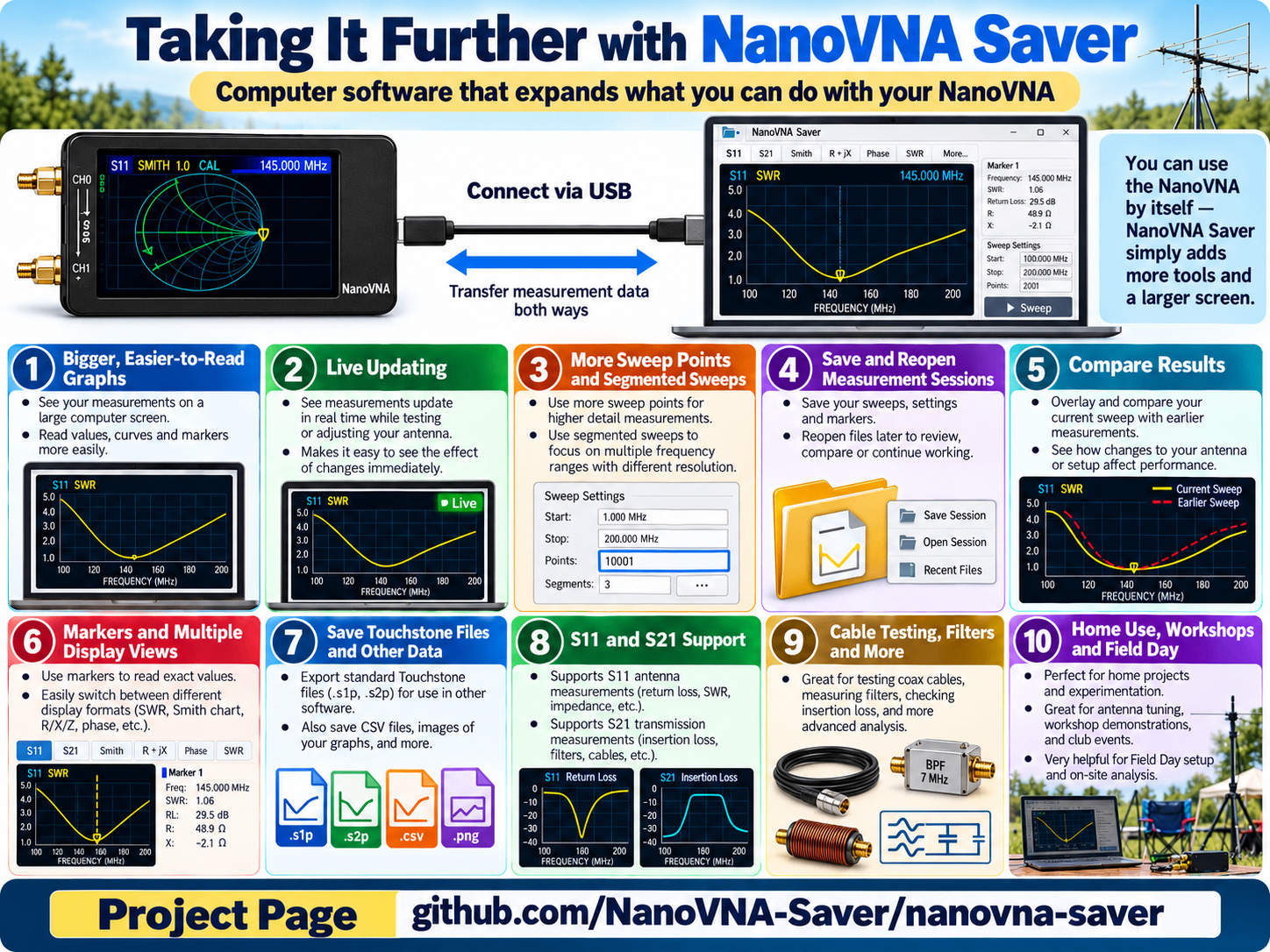
The material below is intended as a beginner-friendly introduction, using simple explanations, illustrations, and examples to help you understand what the NanoVNA is showing and how that information can be used when testing or adjusting an antenna.
Disclaimer: This independent educational material is not affiliated with, sponsored by, or endorsed by the developers, manufacturers, standards organizations, government agencies, or network operators associated with the technologies and services described.